Chapter Books:
The Dreamer by Pam Munoz Ryan
One Crazy Summer by Rita Williams-Garcia
Skinny Bones by Barbara Park
Holes by Louis Sachar
A Long Way From Chicago by Richard Peck
Dear Mr. Henshaw by Beverly Cleary
Joey Pigza Loses Control by Jack Gantos
The Fantastic Secret of Owen Jester by Barbara O'Connor
Theodore Boone: Kid Lawyer by John Grisham
Twilight by Stephenie Meyer
The Hunger Games by Suzanne Collins
Mr. Popper's Penguins by Richard and Florence Atwater
My Guy by Sarah Weeks
The Other Side of Truth by Beverly Naidoo
What Happened to Goodbye by Sarah Dessen
Picture Books
Grandma's Gift by Eric Velasquez
Dave the Potter by Laban Carrick Hill
Balarama: A Royal Elephant by Ted and Betsy Lewin
Amazing Faces: poems selected by Lee Bennett Hopkins
The Stinky Cheese Man and Other Fairly Stupid Tales by Jon Scieszka and Lane Smith
Interrupting Chicken by David Ezra Stein
Owl Moon by Jane Yolen
Alphabet City by Stephen T. Johnson
First the Egg by Laura Vaccaro Seeger
April and Esme: Tooth Fairies by Bob Graham
A Sick Day For Amos McGee by Philip C. Stead
Heather Has Two Mommies by Leslea Newman
In the Night Kitchen by Maurice Sendak
Back of the Bus by Aaron Reynolds
Wednesday, July 27, 2011

What Happened to Goodbye

Dessen, S. (2011). What Happened to Goodbye. New York, NY: Viking.
What Happened to Goodbye is on the New York Times Bestseller for Children's list.
This was a truly lovely book to read. I started off feeling quite sorry for Maclean, the protagonist in this story. After her mom cheated on her dad, got pregnant, then got married, Maclean decided she wanted no part of this "new family" and decided to live with her dad. The only drawback to that decision was that her dad was a restaurant consultant and moved around a lot. The up side to that was Maclean had a fresh start each time they moved and consequently changed her name and reinvented herself. The last move found Maclean being Maclean and having to deal with all the was on her heart. I loved the sweet, sweet relationship that formed between Maclean and her next door neighbor Dave. Though I started off feeling sorry for both Maclean and her dad, the story wrapped up nicely. I liked the way Dessen had Maclean confront all her emotions in the company of her parents. I was also pleased that it wrapped up with a nice big happy ending red bow.
Monday, July 25, 2011
Mr. Popper's Penguins
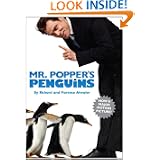
Atwater, R., & Atwater, F. (1938). Mr. Popper's Penguins. New York, NY: Little Brown and Company.
Mr. Popper's Penguins is a delightful easy-to-read book and the entire time I was reading it I was looking for a reason that it would be challenged. Honestly, the only thing that stood out to me was once Mrs. Popper slapped Captain Cook, their first penguin, on the head. One other time the Poppers' son spanked Captain Cook. Nothing else caught my attention as controversial. Was it a little bit of an odd premise? Yes, but I've always found children love books with animals involved in them. Also, these animals didn't talk so that didn't appear controversial. I suppose a group such as PETA could protest and say that the penguins were forced to live in a mild climate which would not be super healthy for them. If that is the case I think it would be taking this light-hearted fiction book a little too much to heart.
The Stinky Cheese Man and Other Fairly Stupid Tales
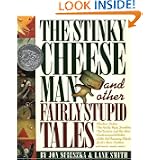
Scieszka, J & Smith, L. (1992). The Stinky Cheese Man and Other Fairly Stupid Tales. New York, NY: Viking.
The Stinky Cheese Man and Other Fairly Stupid Tales is a 1995 Bluebonnet award-winning book.
How can one not love both the clever stories and eye-catching illustrations in The Stinky Cheese Man and Other Fairly Stupid Tales. Granted, this book isn't for all ages. I certainly wouldn't want to introduce my child to fairy tales using this book. But I certainly think it has value with older children. I think it forces the reader to get a different perspectives about beloved stories and tales. I look forward to sharing this story with my class when I teach point of view as well as my own children when they get a little older. Loved it!
My Guy
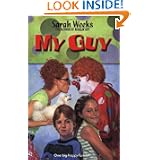
Weeks, S. (2001). My Guy. New York, NY: Laura Geringer Books.
My Guy is a book that has been challenged.
Guy Strang turns desperate when he finds out his divorced mother is going to marry the father of a girl in his class that is practically his archenemy! He didn't even know she had been dating! She drops this bombshell of news after she made him his favorite homemade waffles with strawberries and whipped cream. He felt he should have known better since the last time he was served this delightful dish was when she told him she was divorcing his father. Together with his best friend Buzz, they involve his nemesis Lana to break up his mom and her dad. They devise a plan that does end up working but ends up breaking both adults' hearts. Eventually his conscience gets the best of him and the adults find out the truth. In the end, it seems like the story ends up working out for all parties involved. I'm not certain why this book has been challenged. Could it have been children plotting revenge-so to speak- against their parents? Possibly. I felt sorry for Guy as I was reading this. Thankfully I can't relate to this story or the plight of any of the characters.
Sunday, July 24, 2011
The Other Side of Truth
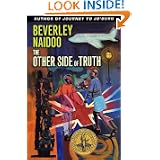
Naidoo, B. (2000). The Other Side of Truth. New York, NY: HarperCollins.
The Other Side of Truth is a book that has been challenged.
I really enjoyed reading The Other Side of Truth, and I'm a little surprised that it is a book that has been challenged. I suppose one might challenge it for several different reasons. Sade and Femi, the children and protagonists in this story, witness the drive-by shooting of their mother and see her die right in front of them. I can see where this might be disturbing as a young reader. There is also the story of a minor character whose father is killed in prison, and I suppose a young reader might also be upset with this too. There is also the driving force behind this story and that is the political asylum that the children seek after fleeing their country of Nigeria. I suppose this very touchy subject of country upheaval and civil war could also cause someone to challenge this book. For me it was a very interesting read. I've a couple of memoirs, A Long Way Gone and Left to Tell which have been based on political unrest in South Africa. Although fictional, there was some elements of nonfiction woven in and it made for a very interesting story and one that I believe has value for people of all ages.
Friday, July 22, 2011
The Fantastic Secret of Owen Jester
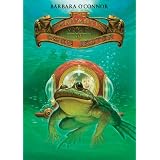
O'Connor, B. (2010). The Fantastic Secret of Owen Jester. New York, NY: Frances Foster Books.
The Fantastic Secret of Owen Jester is on the Notable Books for Children List.
Loved this sweet, innocent book! Owen is a good 'ole southern boy living in an innocent time. He tries to make a bullfrog that he found in his home of Carter, Georgia a pet but finally comes to the realization that this isn't fair to a sad bullfrog; he needs freedom not captivity to be happy. Owen has something to take his mind off his troubles, though. He hears a clatter come from the local passing train and he is out to find the source! He does so successfully and gets his two buddies involved. With help from the know-it-all neighbor Viola, the four children uncover his secret: a submarine. Not only do the kids get the sub successfully submerged but Owen and Viola end up going for a joy ride in the pond and spy Tooley Graham, the former bullfrog pet! I really didn't catch and save much other than lightning bugs as a kid, but I just felt right at home while reading this wonderful tale.
Heather Has Two Mommies
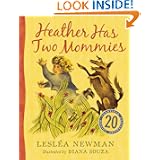
Newman, L. (1989). Heather Has Two Mommies. Los Angeles, CA: Alyson Wonderland.
Heather Has Two Mommies is on the challenged book list.
This was my first time reading this book, and I was a little taken aback from the illustrations. The illustrations portray both women very butch-like in a rather stereotypical way. Also the "no nukes" slogan on one of her mother's shirts stands out to me; I suppose it was a sign of the times. I feel bad for Heather as she realizes she doesn't have a dad. The book does a good job of illustrating other nontraditional families as the explanation for the absence of her father. I grew up in a nuclear family and so I don't have any personal experience with the theme of this book. I do think it's good that there is a book parents can turn to for help explaining similarities and differences among families.
Skinnybones
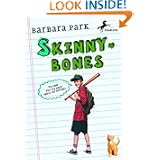
Park, B. (1982). Skinnybones. New York, NY: Yearling.
Skinnybones is a 1985 Bluebonnet Award-winning book.
Alex Frankovitch is a middle school student who has always typically been the smallest boy in his class. His archenemy, T.J. Stoner, dubs him "skinnybones" but seems to be the only one who calls him this. Alex tends to be the class clown and feels that his teachers and some of his classmates don't like him. He plays right field on the baseball team but doesn't feel he is any good and doesn't like to play. I really couldn't identify with Alex. I didn't play sports in middle school and so I'm not sure how he felt. I did have a hard time at one point in junior high school so in one respect I could understand feeling alone. He seems to turn things around at the end of the story and I'm glad for this because, all of his attempts at joking about his dreary situation aside, I started to feel really bad for him. I'm glad things ended on a positive note in this book.
Thursday, July 21, 2011
The Hunger Games
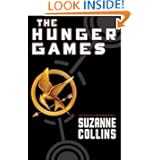
Collins, S. (2008). The Hunger Games. New York, NY: Scholastic Press.
Disturbing! This is my personal reaction to the theme of this book!! I admit that the premise of the book was highly creative I just can't get past the killing in it! I was not prepared for this at all when I picked up the book, not that I had any preconceived notion. I just haven't read a book like this in awhile. I don't generally gravitate towards modern fantasy, so as I read about Panem I had to change my whole mindset. I will admit that I was rooting for Katniss from the moment she started describing her fierce loyalty towards her sister. To get past the brutal way the 'kids' were pitted against each other, I bought into the feelings that were there between Katniss and Peeta and I found myself rooting for them as they made their way towards the end of the 'game'. I was hugely disappointed the way the story ended between these two characters. I suppose it's to continue the trilogy.
Tuesday, July 19, 2011
Owl Moon
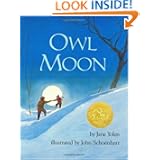
Yolen, J. (1987). Owl Moon. New York, NY: Philomel Books.
Owl Moon is a 1988 Caldecott Medal award-winning book.
One way that Owl Moon reminds me of my childhood is the way their feet crunch through the snow. Growing up in Chicago, I can still recollect the sound of my feet planting themselves in newly fallen crisp snow. Living in the suburbs, I don't have the experience of owling or going looking in the woods so that is a difference between my life and the book. There is a sort of poetry about this book as Yolen chooses words very carefully with a sort of a rhythmical cadence. Did I like the book? Truthfully, even though it is a sweet story about a father and son sharing an memorable activity together I found it a little bit boring.
In The Night Kitchen
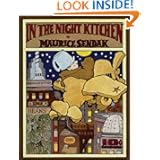
Sendak, M. (1970). In the Night Kitchen. New York, NY: Harper Collins Publishers.
Sendak has quite an imagination in this book. Essentially, Mickey is the reason each one of us have cake in the morning; his assistance to the bakers single-handedly get the milk into the batter. I was a little shocked at the content of the book. It wasn't so much that the boy appears completely naked and that it's very obvious from viewing him from the front that he's a boy. I just haven't seen that kind of illustration in a children's book. I have to say that I don't see how that illustration adds value to the story. I understand that the author has the boy, the main character, slip out of his pajamas into the night sky and falls into batter. I just think that he could have done that same action with his underwear on and gotten the same results. It was also a little disturbing that the bakers end up "baking" him. I realize that this book is a little dated, but surely even then a boy in the oven would have been disturbing content.
Monday, July 18, 2011
Amazing Faces
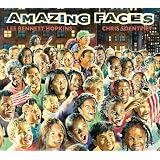
Hopkins, L. (2010). Amazing Faces. New York: NY: Lee & Low Books, Inc.
Amazing Faces is a 2011-2012 Texas Bluebonnet Nominee.
This is a refreshingly diverse collection of poems featuring strong characters in a variety of moods. The book starts out with a poem about all that lies in the future of a baby; a bright life ahead of him with endless possibilities. It continues on with other happy, upbeat poems but it is not without the sobering slap of reality too. There is a poem about a boy who feels lonely and who knows what value he would bring to someone if only given the chance to contribute. Who hasn't felt like that at one time or another?
Twilight
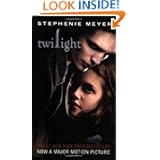
Meyer, S. (2005). Twilight. New York, NY: Little, Brown, and Company.
I admit that before I saw all of the movie paraphernalia at Toys R Us, I was a HUGE fan of this book. It struck a chord with me and made me believe in it. I heard many criticisms of the story regarding the simplicity of storyline; that didn't matter to me. I was HOOKED! I loved that a loner, Bella, fell in love with essentially another loner, Edward and the feeling was mutual. I love that they seemed to bring out the best in each other while at the same time feeling more confident in themselves. It didn't matter to me that a human falling in love with a vampire and vice verse was ridiculously far-fetched because I took this story deeper than that. I went with the love theme of which I can relate to. It made me feel more in love with my husband for all the good qualities that his love brings out in me.
Theodore Boone: Kid Lawyer
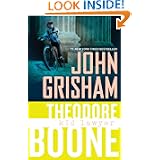
Grisham, J. (2010). Theodore Boone: Kid Lawyer. New York, NY: Dutton Children's Books.
Theodore Boone: Kid Lawyer is on the New York Time's Bestseller for Children's List.
Grisham started this book with high-interest attention to detail. The setting and Theo's family history was painted perfectly and I turned the pages drinking in the scene. A thirteen-year-old middle school student, he was a prodigy in law. That did not come by chance; both of Theo's parents are lawyers. His dad is real estate law and his mother is a divorce attorney that represents women. The beginning of the book had me turning page after page, reminding me of the time I read The Firm also by Grisham. Theo's popularity is quiet but strong; many kids and adults alike ask him legal advice and he is more than willing to help out. Before long, Theo is approached by someone who holds the firming evidence in a high-profile murder case in town. Divided between his loyalty to keep this secret and his loyalty to the law, he finally takes this to his uncle who then in turn suggests that this be taken to his parents. While Grisham wants to capture the reader, I felt this story line was a little anticlimactic in the end. In fact, the book ends with Theo being approached for legal advice on his return to school from a school secretary. With all the attention paid to the case, it was an odd way to end the story.
Saturday, July 16, 2011
Back of the Bus

Reynolds, A. (2010). Back of the Bus. New York, NY: Philomel Books.
Back of the Bus is on the Notable Children's Book List.
Exposition: It's December 1, 1955 in Montgomery, Alabama and a young boy is traveling by bus with his mama.
Conflict: Rosa Parks does not get up out of her seat on the bus.
Rising Action: The young boy and his mama are sitting in the back and he is playing with his marble .
Climax: The bus driver tells the people sitting up front that they have to move, but Rosa Parks continues to stay in her seat.
Falling Action: Rosa Parks gets escorted off the bus in handcuffs by a policeman.Resolution: When the bus starts up again, the young boy's mama reassures him this will all be forgotten tomorrow but he has something in him that tells him it won't be.
This is a well-illustrated book done by Floyd Cooper. His realistic pictures have a grainy quality to them that seems to establish the setting. The illustrations also define and develop the characters.
A Sick Day for Amos McGee
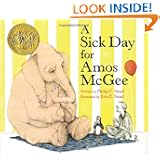
Stead, P. (2010). A Sick Day for Amos McGee. New York, NY: Roaring Brook Press.
A Sick Day for Amos McGee is on the New York Times Bestseller for Children's List
Exposition: Amos is an elderly man who is dear friends with some animals from the zoo.
Conflict: One day, Amos gets the sniffles and decides to stay home sick from work.
Rising Action: Each day, Amos does a special activity with each of his friends at the zoo.Climax: One day when Amos doesn't come to visit his friends at the zoo, they take the bus and go to see him
Falling Action: The animals each do their activity, more or less, with Amos at his home.
Resolution: Amos and the animals decide it's time to go to sleep since they have a morning bus to catch the next day.
Erin E. Stead does a fantastic job of illustrating this book. Stead pays close attention to detail, drawing the reader's eyes to certain items on the pages which are accented with contrasting, bold color. The other colors on the page take on a muted, sort of dull appearance but each object is loaded with detail.
April and Esme: Tooth Fairies
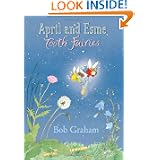
Graham, B. (2010). April and Esme: Tooth Fairies. Somerville, MA: Candlewick Press.
April and Esme: Tooth Fairies is on the Notable Children's Book List.
Exposition: Two sisters, April and Esme, want to go on a mission during the night to get a tooth from a little boy.
Conflict: Their parents think that they are too young to deal with the dangers of traveling alone.
Rising Action: The wind blows them around as the sisters fly through the night sky to retrieve the tooth.
Climax: Instead of placing the tooth under his pillow, the little boy put the in a cup of water and April had to take off her clothes and dive for it.
Falling Action: While April and Esme were in the little boys room, he opened his eyes so they whispered in his ear that they were spirits of the air and he dreamed them.
Resolution: When they returned home with the little boy's tooth, the fairies' parents hugged them with pride until their wings crackled.
This was a well-illustrated book. The pictures have a cartoon-like appearance. The author/illustrator does a magical job of establishing the mood with the illustrations.
Friday, July 15, 2011
Grandma's Gift
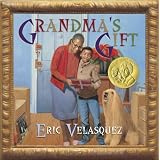
Velasquez, E. (2010). Grandma's Gift. New York, NY: Walker Publishing Company.
Grandma's Gift is a 2011 Pura Belpre illustrator award-winning book.
Exposition: Because his parents work during the day, Eric is spending winter break with his grandma in El Barrio, the section of the city that she lives in.
Conflict: Eric has to go to the Metropolitan Museum of Art for an assignment.
Rising Action: Eric goes to the market for ingredients to help his grandma make pasteles, the traditional Christmas dish for Puerto Ricans.
Climax: Both Eric and his grandma are overjoyed and taken back with emotion when the come upon a painting in the museum of Juan de Pareja.
Falling Action: Eric's parents join him and his grandma for Christmas Eve dinner.
Resolution: On Christmas Eve, Eric's grandma gives him his very own sketchbook and first set of colored pencils and he begins to draw his first self-portrait.
This well-illustrated book portrays an extremely realistic picture of Eric's life and story. Each illustration establishes the mood. The illustrations also provide a differing viewpoint of other people's cultures in America.
Interupting Chicken

Stein, D. (2010). Interrupting Chicken. Somerville, MA: Candlewick Press.
Interrupting Chicken is a 2011 Caldecott Honor book.
Exposition: Papa chicken is putting his daughter to sleep but not without a bedtime story first.
Conflict: Little red chicken interrupts each story that Papa chicken tries to tell her.
Rising Action: After being interrupted twice, Papa agrees to read little red chicken another bedtime story.
Climax: Little red chicken can't control herself and ends up blurting out in the last story.
Falling Action: Papa is out of stories so little red chicken tells Papa a story instead.
Resolution: After Papa falls asleep during little red chicken's story, little red chicken climbs in and sleeps next to him.
This well-illustrated story pays close attention to detail. The pictures are painted wit vibrant colors that help bring the story to life. The stories that Papa chicken read are done in sepia tones and when little red chicken interrupts the story he appears in bright, bold colors.
A Long Way from Chicago

Peck, R. (1998). A Long Way from Chicago. New York, NY, Dial Books for Young Readers.
Exposition: Nine-year-old Chicagoan Joey Dowdel and his slightly younger sister Mary Alice spend a week each summer in central Illinois with their grandmother from 1929-1935.
Conflict: Both siblings would rather be back in the city of Chicago than with their eccentric, country grandmother.
***This chapter book deviates from the traditional plot line. Each chapter is its own little mini-story chronicling the adventures that the children have with their grandma.
Resolution: In this delightful book, both children learn to appreciate the ways of their grandmother and each find the other taking on some of her unique characteristics.
Dialogue: This book infuses country sayings with Depression era colloquialisms.
Unexpected Insights: Each year both children find themselves appreciating their grandmother, quirkiness and all.
Monday, July 11, 2011
Dave the Potter: Artist, Poet, Slave
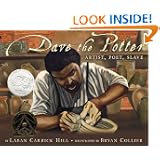
Hill, L. (2010). Dave the Potter: Artist, Poet, Slave. New York, NY: Little, Brown and Company.
Dave the Potter: Artist, Poet, Slave is a 2011 Coretta Scott King Illustrator Award-winning book as well as a 2011 Caldecott Honor book.
Dave the Potter: Artist, Poet, Slave is based on the life of this man from the mid 1800's. He used clay which was just dirt that ran between fingers to the average person to mold his masterpieces. He worked the clay between his fingers on wet days like "mud pie heaven" (Hill, 2010). This book takes the reader through Dave's process from the start to the finished product all the while enveloping him in the captivating illustrations. He ends each piece by writing a poetic line and signing his name.
This book's illustrator is a well-deserved recipient of the Coretta Scott King Illustrator Award. The illustrator, Bryan Collier, completed the illustrations using watercolor and collage. With the aid of these beautiful illustrations, the mood is established in this book.
Balarama: A Royal Elephant
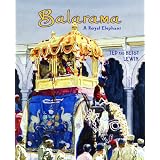
Lewin, T. & B. (2009). Balarama: A Royal Elephant. New York, NY: Lee & Low Books, Inc.
Balarama: A Royal Elephant is a Texas Bluebonnet book.
Balarama: A Royal Elephant treks the accounts of world travelers Ted and Betsy Lewin in Southern India. They meet Drona, a majestic elephant who is supposed to lead a majestic parade and decide that a year later they will return for it. Sadly, when they return to India they learn that Drona was electrocuted on the side of the road in a freak accident and is dead. They meet the new leader of the parade, Balarama. She will be responsible for carrying the howdah, a ceremonial carriage made out of wood but sheathed in gold.
The authors are also the illustrators of this well-illustrated book. These illustrations establish setting. They also define and develop characters through the enormous attention to detail in the realistic paintings.
Sunday, July 10, 2011
Alphabet City
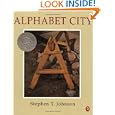
Johnson, S. (1995). Alphabet City. New York, NY: Viking.
Alphabet City is a 1996 Caldecott Honor book.
Alphabet City takes the reader through the alphabet starting from A and ending with Z. Each letter is represented by a painting from the author. The author says that "all letters had to be capital letters, found in their natural positions, out-of-doors or in public spaces" (Johnson, 1995). For example the letter A is made from the end of a construction horse and the letter J is made from the curled end of an iron stairwell rail. The author states that it is his "hope that (his) paintings will inspire children and adults to look at their surroundings in a fresh and playful way" (Johnson, 2007).
This is a very well-illustrated book. It is a series of realistic paintings done from photographs. These paintings provide a differing viewpoint for the reader.
First the Egg

Vaccaro-Seeger, L. (2007). First the Egg. New Milford, CT: Roaring Brook Press.
First the Egg is a 2008 Caldecott Honor book.
This book takes the reader from the origination of thought to the end product. All parts in between are skipped and the reader is only left with the end. It is a good example of sequencing insofar as starting someplace and ending up at a different place. For example, the title aptly named title takes the reader from the egg to the chicken. Another example in this charming and insightful book is "First the Paint, then the Picture" (Vacarro-Seeger, 2007).
This book was very well-illustrated by its author. The illustrations in First the Egg reinforce what the text is saying. There are also cut-outs on the first thing mentioned in each example which draw the readers eyes to the page.
The Dreamer
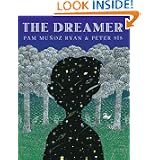
Munoz-Ryan, P. & Sis, P. (2010). The Dreamer. New York, NY: Scholastic Press.
The Dreamer is a 2011 Pura Belpre Award-winning book.
Exposition: Neftali, a lonely Chilean boy who starts off as an eight-year-old and grows to be a teenager throughout the story, lives with his stepmother, older, and younger siblings, and an oppressive, overbearing father.
Conflict: Neftali, a dreamer and left-brained thinker, wants to collect things and express his thoughts and feelings in writing while his father thinks he is a weak person and wants him to be a doctor or business person.
Rising Action: While on summer vacation with his stepmother, father, and sister, Neftali experiences some serene freedom in a cottage trying to nurse a swan back to health and reading books.
Climax: Upon discovering that Neftali has been writing articles for a university paper, Neftali's father explodes in a fit of rage and burns his journals.
Falling Action: Neftali goes away to university and continues to write.
Resolution: In order to keep his family from embarrassment and to stay away from his father's wrath, Neftali decides to continue to write but gets clever and uses a pen name (Pablo Neruda).
Music in Language: Prose is keenly intertwined with poetry in this story and the reader is posed with a poetic reflection accompanied by an carefully constructed illustration between each chapter.
Precise Vocabulary: Neftali keeps a collection of carefully chosen words written on slips of paper in his drawer and these words seem to come to life in different scenes in the book.
Unexpected Insights: Neftali comes to accept himself as he is, love of poetry and physical appearance notwithstanding, in spite of his father's constant nonacceptance of him.
Saturday, July 9, 2011
Dear Mr. Henshaw

Cleary, B. (1983). Dear Mr. Henshaw. New York, NY: HarperTrophy.
Dear Mr. Henshaw is a 1984 Newberry Award-winning book.
Exposition: The reader learns about Leigh M. Botts, a middle school student living in California's great central valley with his Mom, through a diary as well as letters he writes to an author from Wyoming
Conflict: Leigh is deeply saddened by the relationship he views as broken between him and his dad.
Rising Action: To keep possibly more than one thief from stealing his delicious food from his lunch box, Leigh builds a burglar alarm for his lunch box while at the same time earning a friend.
Climax: Leigh, who wants to be an author, wins an Honorable Mention in a writing contest and, by default from the winner's plagiarism, gets to meet a real-life author that ends up calling Lee an author, making him very proud of himself.
Falling Action: Leigh's dad comes to visit him and hears about his burglar alarm and his winning essay about a time they experienced together.
Resolution: Leigh's anger for his dad lessens as he realizes his dad really does miss him after all.
Understatement: Through his letters to Mr. Henshaw and his journal entries, Leigh's confidence increases through his writing.
Unexpected Insights:: While coming to terms with his parent's divorce, Leigh learns that his dad really hasn't forgotten about him after all.
One Crazy Summer
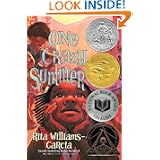
Williams-Garcia, R. (2010). One Crazy Summer. New York, NY: Amistad.
One Crazy Summer is a Coretta Scott King Honor book.
Exposition: Delphine, Vonetta, and Fern, three sisters from Brooklyn who live with their Papa and their paternal grandmother Big Ma, are going to spend the summer in Oakland, California with their estranged mother.
Conflict: Cecile, the girls' mother, does not want the girls with her and this clashes with the girls' desire to get to know her.
Rising Action: After being told by Cecile each day to leave and not come back until late, the girls find themselves at a summer school sponsored by The Black Panthers and get involved in a park rally production reading poetry.
Climax: Cecile gets released from jail in time to watch the girls recite the poem that she herself wrote.
Falling Action: Cecile acknowledges and accepts the girls after witnessing their involvement with her poem at the rally.
Resolution: Cecile confides in Delphine, the oldest of her three daughters, about her life leading up to her leaving and all three girls and their mother embrace right before they get on the plane to go back to Brooklyn.
Precise Vocabulary: Delphine is enamored with Merriam Webster and the story is threaded with her findings from her dictionary.
Unexpected Insights: Throughout her month at her mothers' house, Delphine learns to accept her mother while at the same time coming to terms with being a very responsible eleven-year-old and her role with her sisters.
Friday, July 8, 2011
Joey Pigza Loses Control
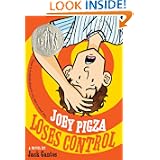
Gantos, J. (2000). Joey Pigza Loses Control. New York, NY: HarperCollins Publishers.
Joey Pigza Loses Control is a Newberry Medal award-winning book.
Exposition: After getting into some trouble from being unsupervised, Joey and his dog Pablo go to stay with his absent, alcoholic father and his grandmother about 3 hours away from home.
Conflict: Joey longs for a relationship with his estranged father.
Rising Action: Regardless of his lack of experience, Joey's father enlists him to be the pitcher of the little league team that he is sponsoring for his required community service project.
Climax: As a way to prove his "normalcy", Joey's father rips off his nicotine patch to "model" his ability to control himself as he flushes down all of Joey's ADHD medication patches down the toilet.
Falling Action: Joey is "wired" as he loses control on the pitcher's mound and runs away to the mall where he calls his mom to come and get him.
Resolution: Joey willingly gets back on his medicine and comes to the realization that he and his father really aren't quite alike after all.
Figurative Language: Joey's father continually compares Joey to a caveman on the mound in order to get him to perform at a certain level.
Unexpected Insights: Joey discovers that he really is a "better Joey" on medicine despite his effort to try to manage without it.
Tuesday, July 5, 2011
Holes

Sachar, L. (1998). Holes. New York, NY: Scholastic.
Holes is a Newberry Medal award-winning book.
Exposition: Stanley Yelnats, an urban middle school student without friends and siblings, often finds himself unlucky while trying to avoid his bully.
Conflict: Stanley, who is convicted of a crime he genuinely didn't commit, is sent away to a detention "Camp".
Rising Action: Stanley leaves camp for the desert in search of Zero, another camper who has abandoned the camp.Climax: Stanley and Zero find the buried treasure but as they do they are immediately surrounded by the Warden and her accomplices.
Falling Action: The Texas Attorney General and a lawyer for Stanley show up while Stanley are Zero are being confronted by the Warden and others.
Resolution: The treasure's suitcase has Stanley Yelnats inscribed on it, negating the Warden's claim that it belongs to her and setting in motion a chain of events that lead to the release of both Stanley and Zero.
Unexpected Insights: The protagonist started out feeling left out and unwanted, bullied by others but by the end of the novel he had transformed both physically and mentally, discovering himself along the way.
Understatement: Another story takes place within Stanley's story and it takes you back in time revealing a backstory. It isn't until the end of the book where both stories merge and the pieces fit together.
Subscribe to:
Posts (Atom)